Why most "bids" are just budget numbers
Why Most “Bids” Are Really Just Budget Numbers
Most people think a bid means a contractor has locked in a final, guaranteed price.
In reality, that’s rarely what’s happening.
In construction, the majority of “bids” floating around are actually budget estimates, ballpark projections built on incomplete information, assumptions, and unknowns. Here’s why:
Incomplete Scope = Incomplete Price
Clients often request bids before detailed plans, specs, or engineering are finalized.
Without a clear scope, contractors must guess material grades, structural requirements, soil conditions, hidden issues, and code-compliance adjustments. A guess is not a bid; it’s a budget placeholder.
Subcontractor & Supplier Pricing Isn’t Locked
True bids require verified numbers from suppliers and trades. The thing is that lumber, steel, concrete, and labor availability all fluctuate. If the contractor hasn’t received firm quotes yet, the number you see is a projection, not a commitment.
Assumptions Are Driving the Math
Most “bids” are based on assumptions like standard soil, no demolition surprises, utilities are within normal reach, weather cooperates, and lead times won’t spike. Assumptions aren’t binding; they exist only to give the client a directional cost until real data is available.
Clients Often Want a Number Before Paying for Design
Contractors get asked for “free bids” before any preconstruction work is authorized.
A real bid requires site visits, engineering coordination, quantity take-offs, constructability review, sub bids, and scheduling analysis. All of that takes time and money. So, if preconstruction isn’t funded, the contractor provides the only thing possible: a budget range.
Hidden Conditions Can Blow Up Any Early Number
Foundation rot, failing framing, bad wiring, illegal work from previous owners, underground surprises, it’s impossible to price what you can’t see. Budget numbers assume a best-case scenario until destructive inspection or full design reveals the truth.
A Bid Isn’t Real Until It’s Attached to a Contract
A binding, accountable price requires a defined scope, defined materials, schedules, change-order process, exclusions, allowances, and legal terms. If it’s not tied to a contract package, it’s not a bid it’s a contractor’s educated guess.
So Why Do Contractors Give “Budget Bids”?
Because clients need something to react to like; Is this project even feasible? Do we need to scale back or phase it? Is financing possible? Should we pay for design? A budget bid provides direction. A real bid provides accountability. They are not the same thing.
Real Talk: A “Bid” Without Scope Is Just a Number
In a world of thin margins and rising material volatility, contractors can’t and shouldn’t pretend otherwise. If you want a true bid, you need a complete scope, plans & details, preconstruction investment, time for suppliers & trades to quote, and a contract-ready package. Everything else is a budget estimate wearing a costume.
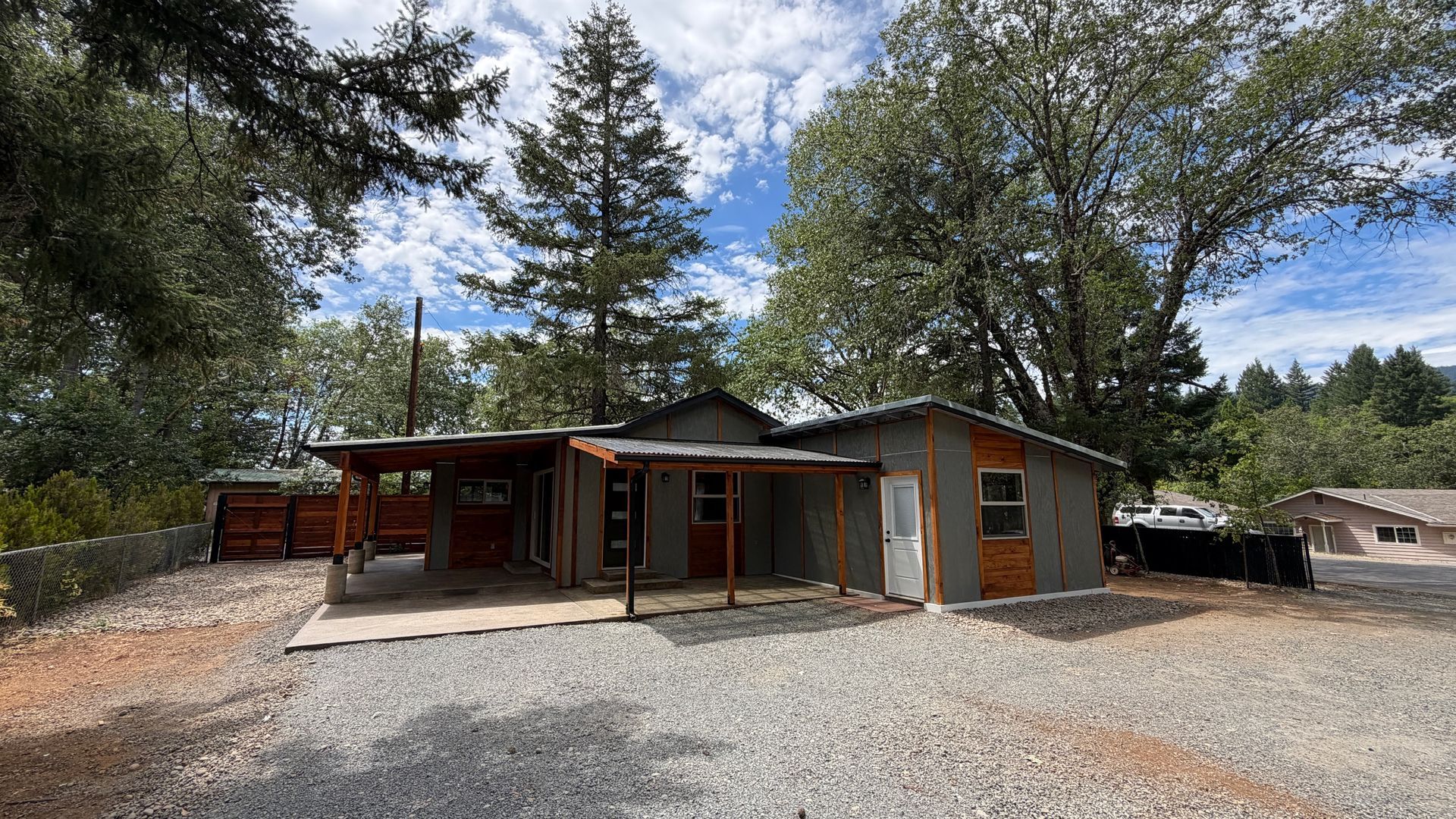
Location, comfort, and opportunity come together in this inviting 3-bedroom, 1-bath home in the heart of Cave Junction, OR.
Managing Metal Building Delivery Delays | ACE Construction Blog
How Investing in Your Community Is Investing in Your Company’s Future
Upgrading from a composite roof to a metal roof isn’t just an improvement; it’s a strategic investment in durability, efficiency, and peace of mind. Done right, it’s the last roof you’ll need to think about for decades. All Construction Elements is here for that.
Fast, accurate subcontractor quotes help construction bids get submitted on time and priced right. Learn why quick numbers matter in Southern Oregon.
Southern Oregon construction, Medford contractor, Grants Pass construction company, construction chain of command, general contractor Southern Oregon, construction project management Oregon
Tiny home villages are a fast, cost-effective housing assistance solution. Learn how thoughtful construction and planning make them successful.
Discover why scope-driven, line-item estimating leads to more accurate construction bids. Learn how ACE Construction delivers transparent pricing and predictable project outcomes.
Why Square-Foot Pricing Doesn’t Work in Construction
